
A Wedding Day Timeline for Beautiful, Relaxed Photos
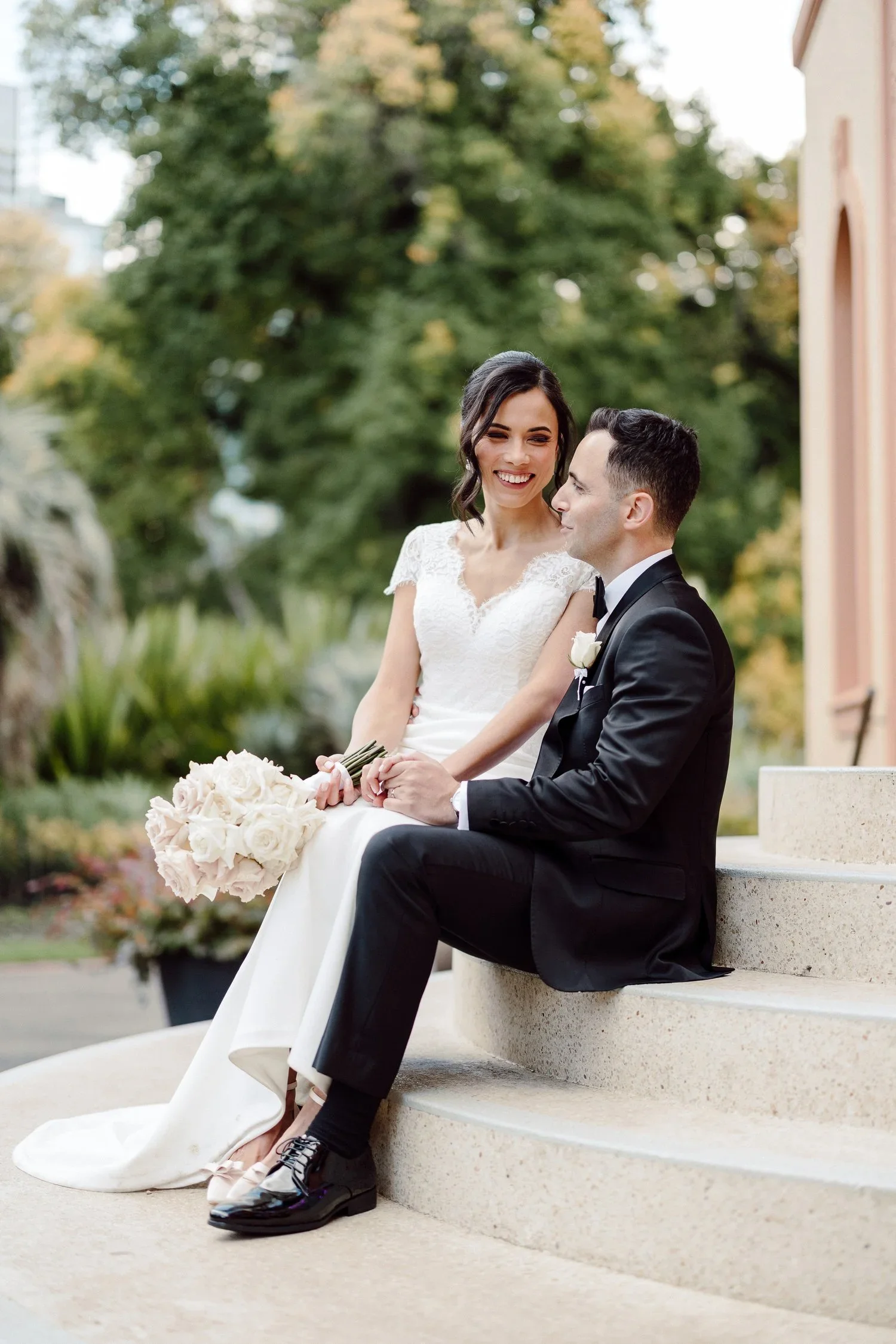
If I could give couples one piece of advice about their wedding day, it would be this: leave more time than you think you need. Almost nothing on a wedding day runs early, and the days that feel calm and joyful are almost always the ones with a little breathing room built in. The best photos do not come from chasing the clock. They come from you actually being present, laughing, hugging people, having a drink, while I quietly work in the background.
So think of this less as a rigid schedule and more as a gentle framework. My job on the day is to keep things moving without you ever feeling rushed. This post shows you how the pieces fit together, with verified Melbourne sunset times and a worked example you can adapt to your own day.
The golden rule: build in buffers
Hair and makeup runs late. A button pops. Traffic happens. Guests linger over canapés. None of it is a problem if there is slack in the timeline. I usually suggest padding the getting-ready window and adding 15 minutes here and there between key moments. If everything runs on time, you get a relaxed drink and a breather. If it does not, nobody notices. That is the whole trick.
Back-time your ceremony to golden hour
Here is the part most couples do not think about, and the single biggest thing you can do for your portraits. The soft, warm light in the 30 to 45 minutes before sunset is the most flattering light of the whole day. The way to catch it is to work backwards from sunset when you set your ceremony time.
The rule of thumb: finish your ceremony about two and a half to three hours before sunset. That leaves room for congratulations, family photos and canapés, and still lands your couple portraits in that golden window.
Melbourne sunset times, 2026
These are calculated for Melbourne, for the 15th of each month, and they account for daylight saving. Most wedding blogs either skip this or copy numbers that are years out of date, so it is worth having the real figures.
January 8:43pm. February 8:18pm. March 7:39pm. April 5:53pm. May 5:19pm. June 5:07pm. July 5:19pm. August 5:44pm. September 6:10pm. October 7:36pm. November 8:09pm. December 8:37pm.
Use those as a starting point, then read the next section before you lock anything in, because two months on that list will mislead you badly.
The daylight saving cliff, and why April and October are traps
Daylight saving ends on Sunday 5 April 2026 and starts again on Sunday 4 October 2026. On both weekends the sun sets an hour differently on Sunday than it did on Saturday.
Saturday 4 April sunsets at 7:09pm. Sunday 5 April sunsets at 6:07pm. That is 62 minutes, overnight, on consecutive days.
Saturday 3 October sunsets at 6:25pm. Sunday 4 October sunsets at 7:26pm. An hour the other way.
April is worse than the cliff alone suggests, because the month also loses light fast. The 1st of April sunsets at 7:13pm. The 30th sunsets at 5:34pm. That is a 99 minute swing inside one month, so a couple marrying on 4 April who plans off a mid-April figure will schedule their portraits more than an hour after the light has gone.
October runs the other way and is more forgiving. The 1st sunsets at 6:23pm, the 31st at 7:53pm.
If your wedding is in April or October, do not plan off a monthly average. Tell me your exact date and I will give you the real number for that day.
A worked sample day (summer)
Here is a realistic summer timeline anchored to a 3:00pm ceremony with sunset around 8:40pm. Adapt the blocks to your own venue and travel times.
1:00pm Coverage begins. Getting-ready details and the last of hair and makeup.
1:45pm Into outfits, quiet moments, letters or gifts exchanged.
2:15pm Travel to ceremony, a breather before doors.
3:00pm Ceremony.
3:30pm Confetti, hugs, congratulations.
3:45pm Family and group photos.
4:15pm Guests to canapés, you two grab a drink.
4:30pm A short, relaxed couple portrait wander.
5:15pm Join your guests, settle in.
6:00pm Reception begins, entrances.
6:15pm Dinner and speeches.
8:00pm Golden-hour portraits, 10 to 15 minutes, right before sunset.
8:30pm First dance, then the floor opens.
9:00pm Dancing and candid coverage through to wrap.
Notice the portraits happen twice: a relaxed set after the ceremony, and a short golden-hour step-out near 8:00pm for that beautiful last light. You get the best of both without giving up your reception.
How this shifts in winter
Same structure, earlier light. In a winter month with sunset around 5:10pm, you would move the ceremony earlier, say 1:30pm to 2:00pm, so that congratulations, family photos and your couple portraits all land before the light goes. Golden-hour portraits slot in around 4:30pm, before dinner rather than partway through it. The reception then runs into the evening as normal.
Shorter winter days are not a problem at all. We just start earlier. A June wedding with a 1:30pm ceremony gets exactly the same portraits as a January wedding with a 5:00pm one.
Family and group photos: keep them short and sweet
This is the part that most often derails a timeline, so a little planning pays off enormously. My approach is simple: a tight, pre-agreed shot list of the groupings that genuinely matter to you, worked through efficiently while a nominated family member, someone loud and organised, helps gather the right people.
Allow around 20 to 30 minutes. Each grouping takes a couple of minutes once everyone is present, so a list of eight to twelve combinations fits comfortably. A few tips:
Send me your list in advance so nobody is left out and we are not inventing it on the spot.
Keep it to the essentials. Larger extended-family shots can happen informally later.
Do family photos straight after the ceremony while everyone is together and nobody has wandered off to the bar.
Get this bit efficient and you protect the two things you actually want more of: canapés with your guests, and unhurried time with each other.
How long for couple portraits?
Less than you might fear. I do not need hours of posing, because I do not really pose you. Around 20 to 30 minutes after the ceremony, plus a quick 10 to 15 minute golden-hour step-out, is plenty for a full, varied set of images. My style is documentary and film-leaning, so most of the time you two are simply walking, talking and being together while I work. It is genuinely one of the calmest parts of the day.
Coverage hours shape everything
How your timeline comes together depends a lot on how many hours you book. Six hours comfortably covers the back end of getting ready through to the first dances. Eight hours picks up more of the morning and carries you deeper into the reception. All-day coverage means nothing is rushed and nothing is missed. When we plan your day together, we work the timeline around the collection you choose. You can see how the hours compare on the packages page.
If you are adding 35mm film or Super 8, the timeline matters even more, because both formats want daylight. Super 8 in particular lives on golden hour, so the ceremony time you choose decides how good that film looks.
Frequently asked questions
What time should our ceremony be?
Work backwards from sunset. Finishing the ceremony two and a half to three hours before sunset lets family photos, canapés and your couple portraits all fall into that soft evening light. Check your month against the times above, and if you are in April or October, ask me for the figure for your exact date.
How long do we need for couple portraits?
Around 20 to 30 minutes after the ceremony, plus a short 10 to 15 minute golden-hour step-out later on. That is enough for a full gallery without you missing your own party.
Do we need a first look?
Not at all, it is entirely your call. A first look, a private moment where you see each other before the ceremony, can ease nerves and free up more portrait time earlier in the day, which is handy for winter weddings with less light. Plenty of couples love the tradition of waiting until the aisle instead. Both work beautifully.
How much time should we allow for family photos?
Around 20 to 30 minutes, straight after the ceremony, with a short pre-agreed shot list. Keep the list to the groupings that truly matter and nominate someone to help gather people, and it stays quick and painless.
Our wedding is the weekend daylight saving changes. Does that matter?
Yes, more than almost anything else on your run sheet. The sun sets an hour earlier on Sunday 5 April than it does on Saturday 4 April, and an hour later on Sunday 4 October than on Saturday 3 October. Tell me your date early and we will build the timeline around the real number.
What if it rains?
We adapt, and the photos are often better for it. Overcast light is soft and even, which is genuinely lovely for portraits. The main change is that golden hour disappears, so we take the portrait time earlier and use shelter and covered spaces. Every venue I work at has a wet weather plan and I will have looked at yours before the day.
Want a template to fill in?
If a starting point would help, I have a simple wedding day timeline template couples can fill in with their own venue, travel and sunset times. Ask when we are planning your day and I will send it across, then we will tailor it together so your day flows and the light lands exactly where it should.
Ready to talk it through? Get in touch with your date and venue and I will work out your timeline with you.