
Why Film Photography Is Back, and Why It Belongs at Your Wedding
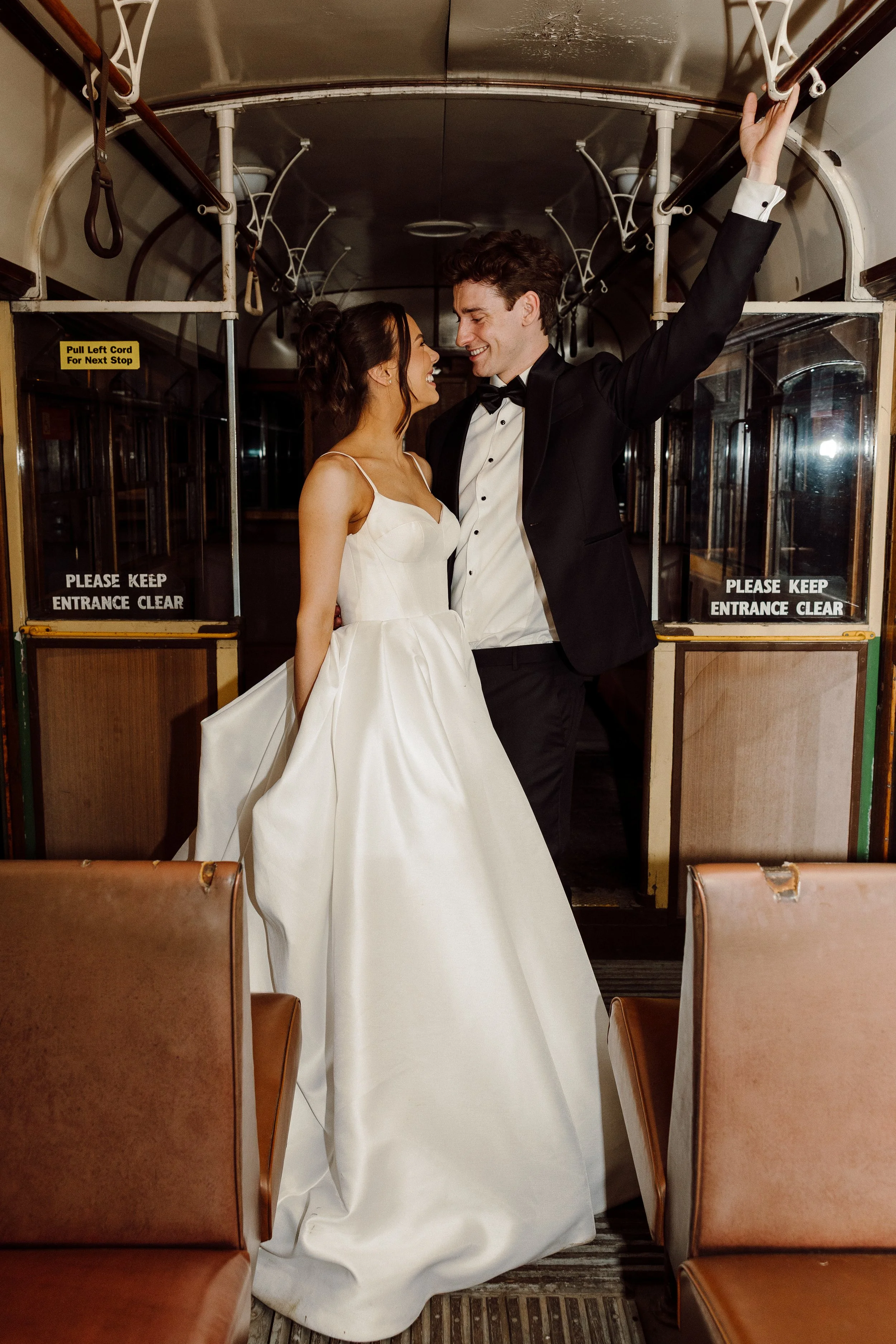
There is a particular kind of light that only film seems to hold. Warm, soft, a little forgiving. It rounds off the harsh edges of a bright afternoon and it glows in the last hour of the day. You have seen it in old photographs of your parents and grandparents, the ones that feel like they were taken in a warmer world. That look is not nostalgia playing tricks on you. It is film.
And it is coming back. Not as a gimmick, and not as a filter, but as a real, deliberate choice that more and more couples are making for their wedding day.
Why film feels different
Digital is sharp, clean and endlessly reliable. Film is none of those things, and that is exactly the point.
Film has grain, the fine texture that makes an image feel like it was made rather than manufactured. Real grain is silver sitting in an emulsion, and it moves from frame to frame, which is why your eye reads it as texture rather than error. A grain filter is a fixed pattern laid over a clean file. Once you have seen the two side by side, you cannot unsee the difference.
Then there are highlights, which matter more at a wedding than anywhere else. Digital clips. Push a white dress into hard sun and the lace becomes a flat white shape that no amount of editing brings back. Film compresses instead of dying, so the dress keeps its detail in light that would have destroyed a digital file. A January ceremony at one in the afternoon is exactly the scenario where this shows.
And every frame costs something, so nothing is wasted. You slow down. You wait for the moment instead of spraying through it. There is a patience baked into film that ends up in the pictures themselves.
Couples describe film photos as feeling like memories rather than screenshots. I think that is the truest thing you can say about it.
The hybrid approach, the best of both
Here is where I want to be completely honest, because this matters. I do not shoot your whole wedding on film and cross my fingers.
Digital is the backbone. It is reliable, it works in any light, and it means your day is fully and safely covered no matter what. Film is the soul. It runs alongside the digital, a roll here, a few frames there, at the moments that deserve that extra warmth. The getting-ready quiet, the portraits in golden light, the loose and joyful bits of the reception.
You get the certainty of digital and the character of film, without gambling your once-in-a-lifetime day on chemistry alone. Reliability underneath, soul on top.
How it works and what it costs
There are two analogue formats I offer, and they do different things.
35mm film, for stills. Real rolls shot alongside your digital coverage, in three tiers.
The Roll, $350. One roll, thirty six frames, spread across your day like a handful of postcards mixed into a stack of documents. Where most couples start.
The Signature, $650. Three rolls, roughly 108 frames, from prep through to the dance floor. This shifts film from a scattering to a parallel record of your wedding, and it is the one most couples choose once they have seen a full gallery.
The Archive, $950. Five rolls, roughly 180 frames, from the first coffee to the last song, plus ten small prints of the frames you choose.
Super 8, for motion. $950. Old-fashioned cine film, the grainy, flickering motion you have seen in home movies from decades ago. Three and a half minutes, silent, cut to music you choose. It runs at a different frame rate to anything your eye is used to, which is why your brain files it under remembered rather than watched.
Here is what happens after the shutter closes on both. The rolls go to a lab and are developed by hand. There is no delete button and no back-of-camera preview. Each frame is scanned to high resolution so it lives happily beside your digital images. The scans are colour-corrected in my style and delivered inside your main gallery, so you have one place for everything.
Developing and scanning add time, so film frames arrive a little after the digital gallery is ready.
What happens if a roll fails
It happens, rarely. Film is chemistry and chemistry occasionally says no.
Two things protect you. Every moment film touches is also being captured digitally, which is exactly why film is an addition rather than a replacement. And if a roll is lost or fails in processing, I refund the film add-on in full. You are never paying for frames that did not come back.
That guarantee is the reason I can recommend film without hedging.
Digital vs film, what each is for
Digital covers everything, reliably. It works in any light and any moment, the feel is crisp and true, and it delivers hundreds of frames. It is the backbone of your day, and it comes back faster.
Film adds warmth and soul. It is happiest in soft and golden light, the feel is grainy and warm, and it gives you a curated handful of frames rather than hundreds. It takes a little longer.
You do not choose one over the other. Digital makes sure the day is covered. Film makes a chosen slice of it unforgettable.
Where film belongs on your day
If you are adding film, these are the moments it loves most.
Getting ready. Quiet, low-key, full of anticipation. Film adds the warmth.
Portraits in golden light. The classic film moment. Nothing renders late-afternoon sun like it, which is worth remembering when you set your ceremony time. The timeline guide has the verified sunset times for every month.
Hard midday sun. Counterintuitive, but this is where film earns its money, because it holds the dress when digital cannot.
The loose reception moments. Laughing, dancing, the in-between. The Signature and The Archive carry film into the reception with flash, which gives the dance floor the look of the photos in your parents' albums.
A single roll can hold the whole heart of a wedding. That is part of the romance of it.
Frequently asked questions
What if a roll fails?
Every moment film touches is also captured digitally, so a failed roll costs you a beautiful bonus, never the memory itself. And I refund the add-on in full if a roll is lost or fails in processing.
Does film work in low light?
It can, in the right hands, but film loves light and is happiest in soft, natural conditions. One roll favours daylight, so The Roll is mostly shot from prep through to golden hour. The Signature and The Archive carry film into darker rooms with flash.
Do we still get a full digital gallery?
Absolutely. The digital gallery is complete and unaffected. Film is added on top, and the scans are delivered inside that same gallery. You lose nothing by adding film.
How long does developing take?
Film goes to a lab, is developed by hand and scanned, so the film frames arrive a little after your main digital gallery. There is no rushing a lab, and you would not want one that could be rushed.
Is film grain the same as a grain filter?
No, and the difference is obvious once you have seen both. Filter grain is a fixed pattern laid over a clean file. Film grain is the image, formed by the particles that recorded the light.
When do we need to decide?
Film is bought and kept cold for each wedding, so let me know at least a month before your date. Adding it later is sometimes possible but never guaranteed.
Can we do 35mm and Super 8?
Yes, and plenty of couples do. 35mm is analogue standing still, Super 8 is analogue in motion. Together they cover your day the way it would have been covered in 1974.
The keepsake side of film
Film and print belong together. There is something right about a warm, grainy photograph living in a beautifully made album rather than only on a screen. If film speaks to you, it is worth looking at wedding albums and prints and framing too, because that is where these images truly come to rest.
For the fully analogue version of the day, The VHS Edition puts your wedding film onto a real playable tape, which is the least practical and most photographed thing I sell.
In short
Film is back because it gives couples something digital cannot: warmth, patience, and a look that feels like memory itself. Paired with reliable digital coverage, you get the safety of one and the soul of the other.
If that combination sounds like you, have a look at 35mm Film and Super 8, or see how they sit inside the full packages. Better still, tell me your date and we will work out which tier suits your day.